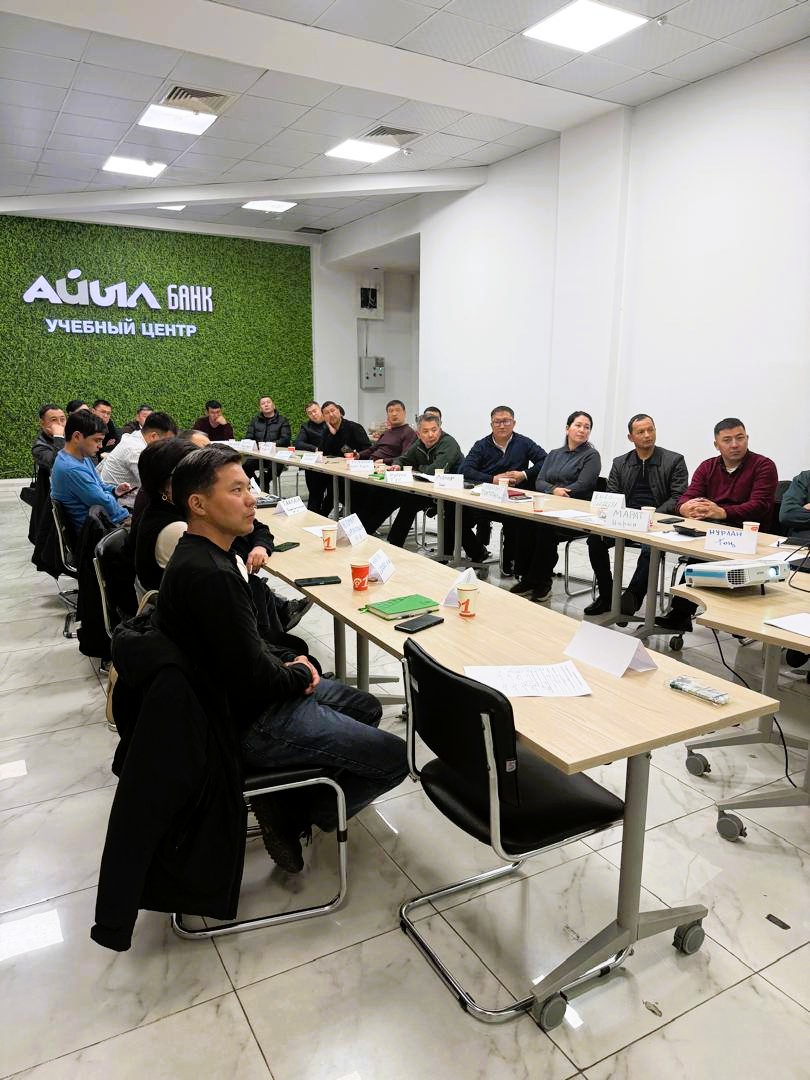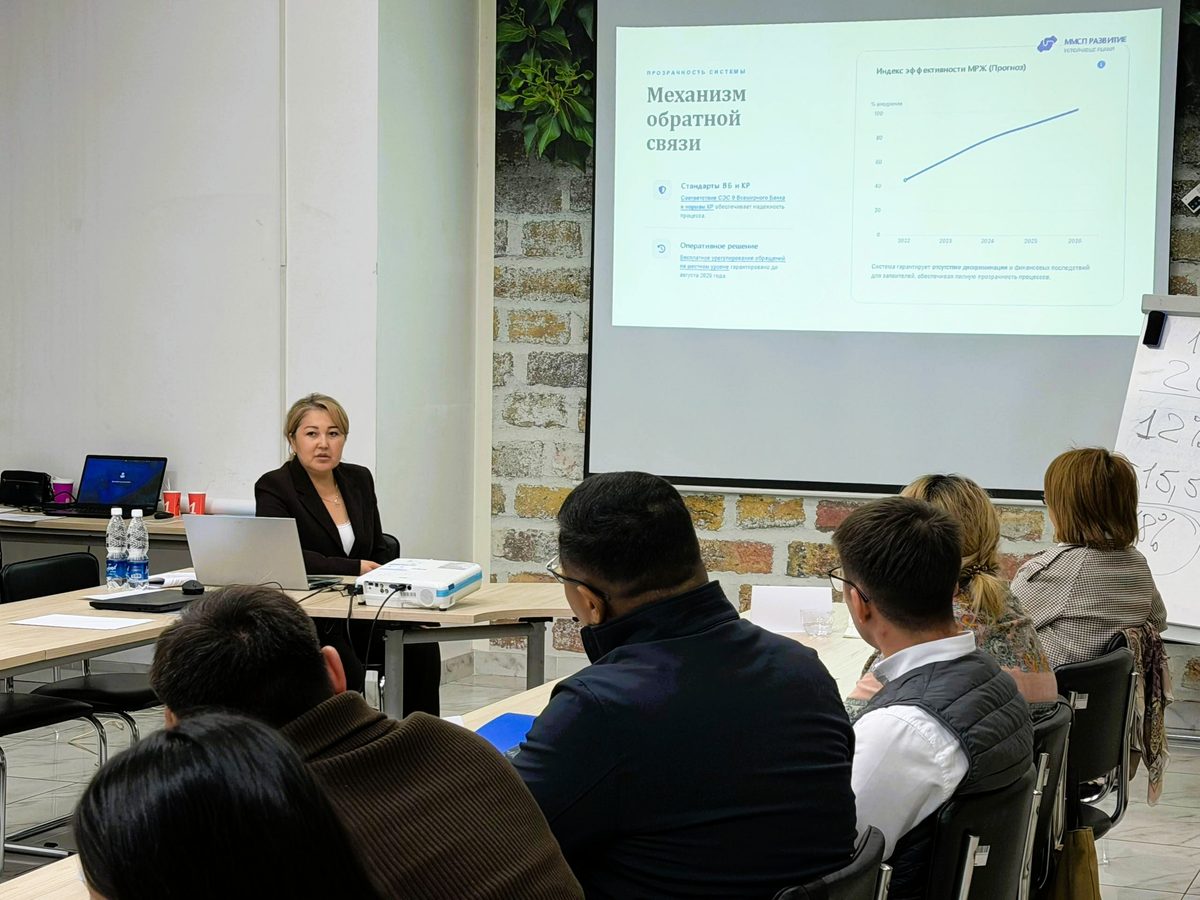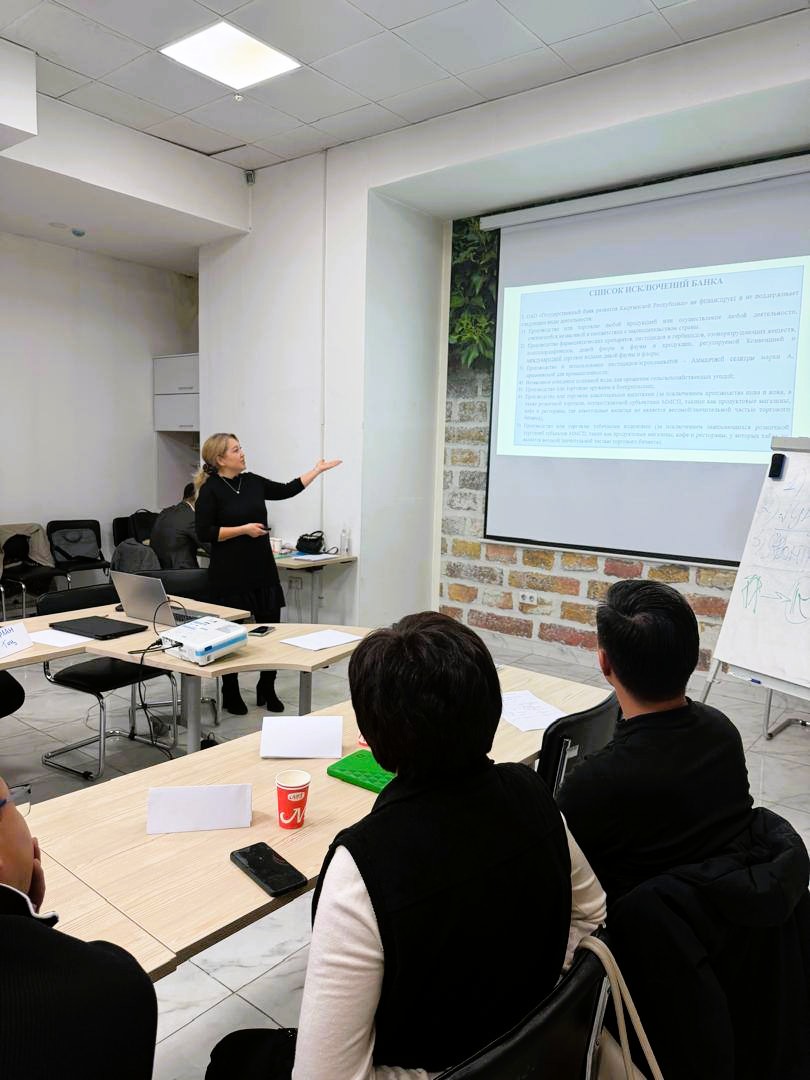

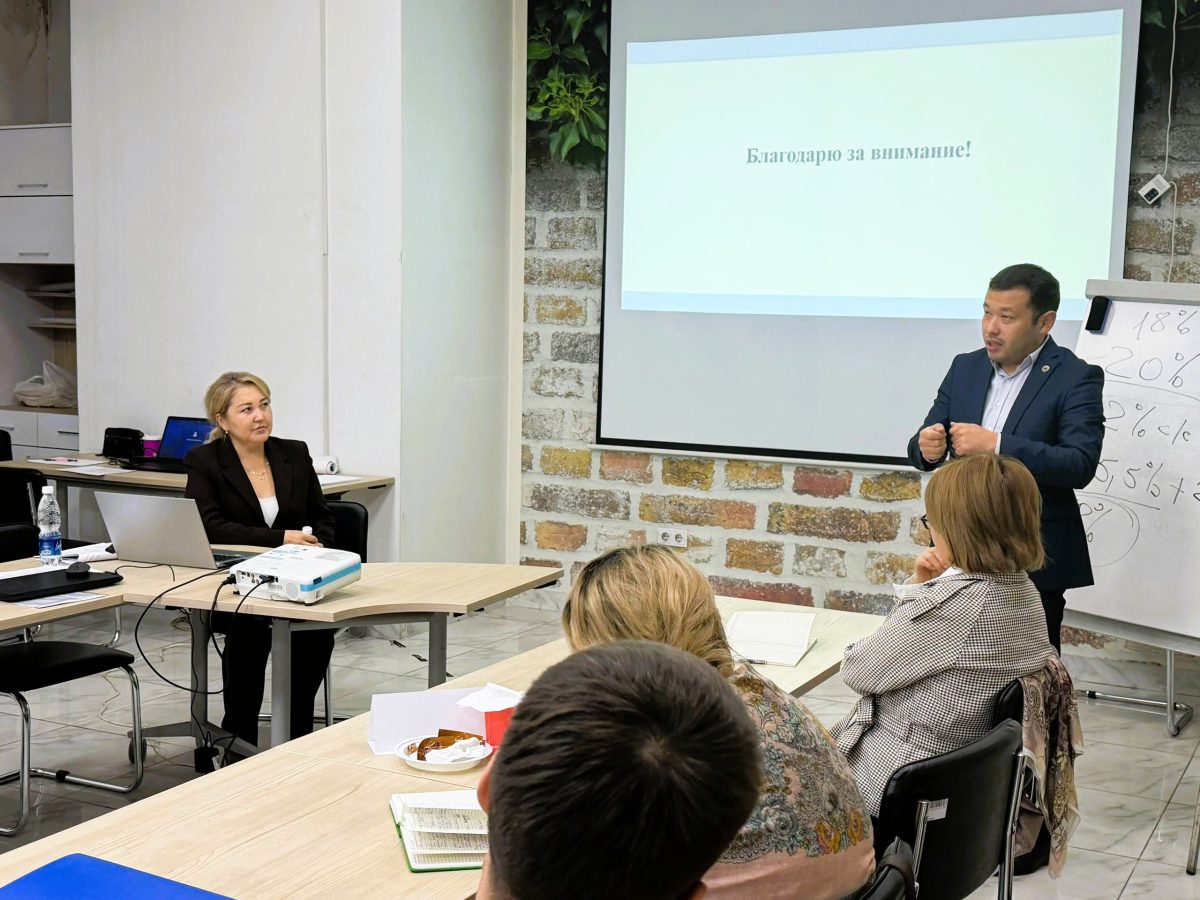
On November 18, 24, and 25, 2026, the State Development Bank participated in the annual training program for ABank employees as invited speakers on sustainable and green financing.
As part of the program, representatives of the State Development Bank held a training session on the application of the World Bank’s environmental and social principles and standards, the Environmental and Social Risk Management System (ESRMS), the Green Taxonomy of the Kyrgyz Republic, and the assessment of environmental and social risks of micro, small, and medium-sized enterprise (MSME) projects.
D. Akylbekov, Director of the Green Financing Methodology Department, and G. Egemberdieva, Environmental Consultant, spoke at the event, sharing their professional knowledge and practical experience in the field of sustainable and green financing.
The training was held as part of the “Development of a Sustainable Financial Market for MSMEs in the Kyrgyz Republic” project, in which ABank OJSC serves as a financial partner. The session was attended by 75 employees of the bank’s lending unit directly involved in the review and financing of MSME projects.
The training covered the World Bank’s Environmental and Social Standards, the key principles of environmental and social risk management, the requirements and practical aspects of applying the E&SMS, and the criteria of the Green Taxonomy of the Kyrgyz Republic.
Particular attention was paid to practical approaches to identifying, assessing, and classifying environmental and social risks in MSME projects, identifying measures to prevent and minimize them, and integrating relevant requirements into the loan application review process.
The participation of the State Development Bank in the training program is aimed at developing the professional competencies of financial sector specialists, sharing practical experience, and disseminating the principles of sustainable and green financing. Such initiatives help strengthen the capacity of financial institutions, develop unified approaches to managing environmental and social risks, and expand financing for MSME projects that comply with sustainable development principles and national and international standards.